Health in Perspective: Technology with Humanity: A future challenge?
Monday 19 May 2025
Opinion column by:

Manuel, a 77-year-old male patient who lives in a municipality 20 kilometers from the capital, has access to a public hospital with limited resources and is attended by people who perform their mandatory social service, who are rotated out of their position every six months.
Manuel has advanced diabetic neuropathy, his diabetes is controlled with insulin that is irregularly supplied by his insurer. He is functionally dependent; his basic activities of daily living are supported by his wife of 75 years. They live alone in their own estrato 2 house; the pension of the two of them amounts to two minimum wages and their two children live their independent lives in the capital of the country, 130 kilometers away.

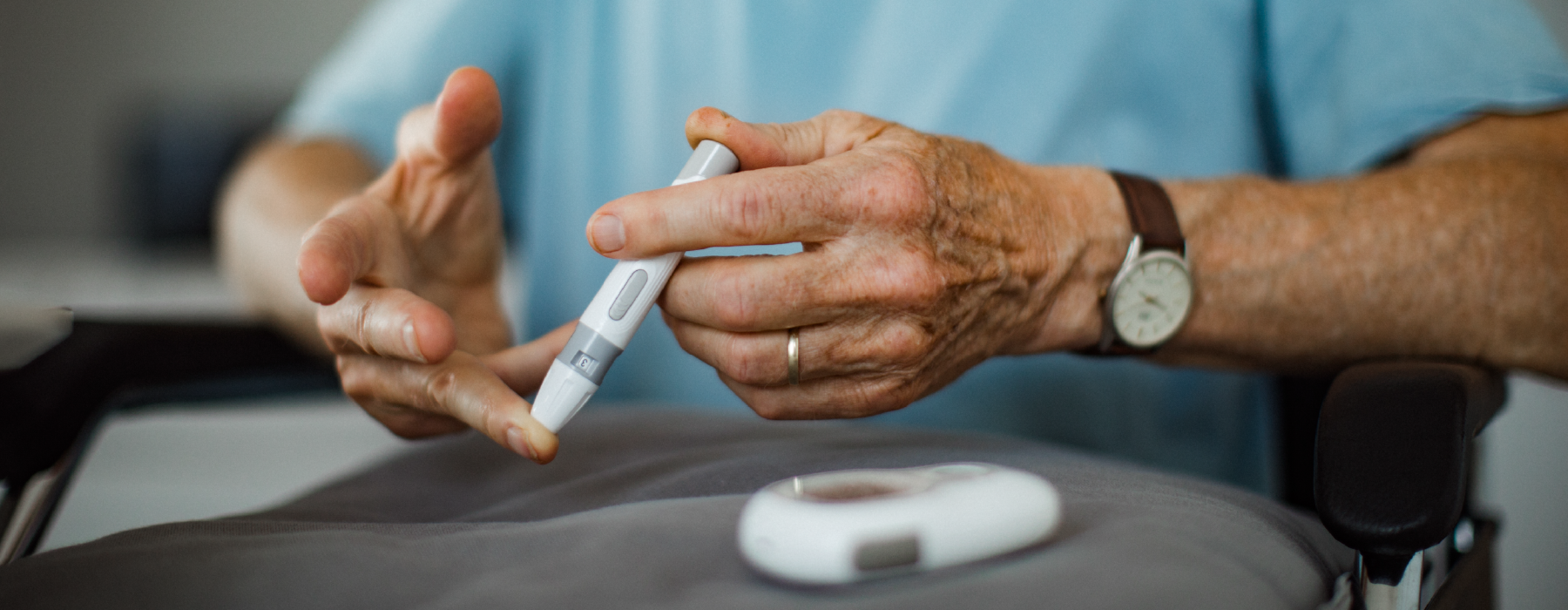
Routine laboratory controls are performed on a regular basis according to the provider’s protocols. In fact, there is a certain “feeling of satisfaction” because lately they are performed at home with “very small devices” that deliver the results immediately and take them directly to the medical record. However, they complain that they are never told what is being done to them and are suspicious that, with just a drop of blood from a finger, such small equipment can generate reliable results. When they go to the doctor’s appointment, the doctor is proud of the technology that allows him to see in almost real time what is happening to Manuel; he asks his wife a couple of questions and tells her that everything is perfectly fine. That they will see each other in three months. Manuel is part of the statistics that say that he is a patient “on target” and that the provider and the insurer should feel satisfied because they have achieved this. However, Manuel and his wife feel increasingly dejected; the advances of the theoretical ease of access to certain technologies is not proportional to their life satisfaction; their family tells them that they should feel grateful because at least they are attended to and have their exams taken at home; in spite of this, the immediacy of results and the “far west of applications and web commands” that they have to navigate to access them, are too complex for their age and do not provide them with that sense of tranquility of the day-to-day challenge.

“The doctor doesn’t look at us and the people taking the exams don’t even say hello,” says the couple.
Conclusion: a lot of technology and little humanity.
Moreover, a few months ago, a solution for accessing preventive diagnostic systems based on artificial intelligence was launched commercially. It is a module similar to lottery sales where you can take up to 80 different tests with an answer in 5 minutes, and it is 100% based on artificial intelligence, something similar to a “health vending machine”, according to its promise. The patient chooses the test he/she wants (including scanner), the results are uploaded to the cloud and the results are sent to you after analysis by Artificial Intelligence and some doctors who may be in another continent. They recommend a scan every three weeks. “Powerful solution,” many physicians express.
Some concerns arise: are the solutions to the healthcare disease process technological, are interoperability, connectivity and artificial intelligence sufficient for comprehensive care, are medical or healthcare team acts going to be scalable by machines and algorithms, and are they going to be scalable by machines and algorithms?
The answer in my opinion is no. Let’s go back to humanity; any administrative or scientific process, the billing, the taking of samples, the delivery of a result, the medical act, the hospitalization, the discharge and the death must be accompanied by people for people. Compassion, mercy, empathy, and verbal and nonverbal communication skills must be strengthened. Manuel and his wife are afraid of unprotection, of death, of dependency. They do not want to upset their children, but they are afraid. That is not mitigated with algorithms or connectivity. It is supported with humanity and the vocation of service that at times we lose sight of.

Let’s go back to the essence: we are humans who attend and understand each other with humans. Technology is a tool; life and its quality is a biological, organic, emotional and social continuum. Artificial Intelligence does not hug, it hears but does not listen, it analyzes and is fast but does not look you in the eye, nor does it generate empathy. It is only a support, but it cannot become the end.
Let’s promote technology and foster humanity.